
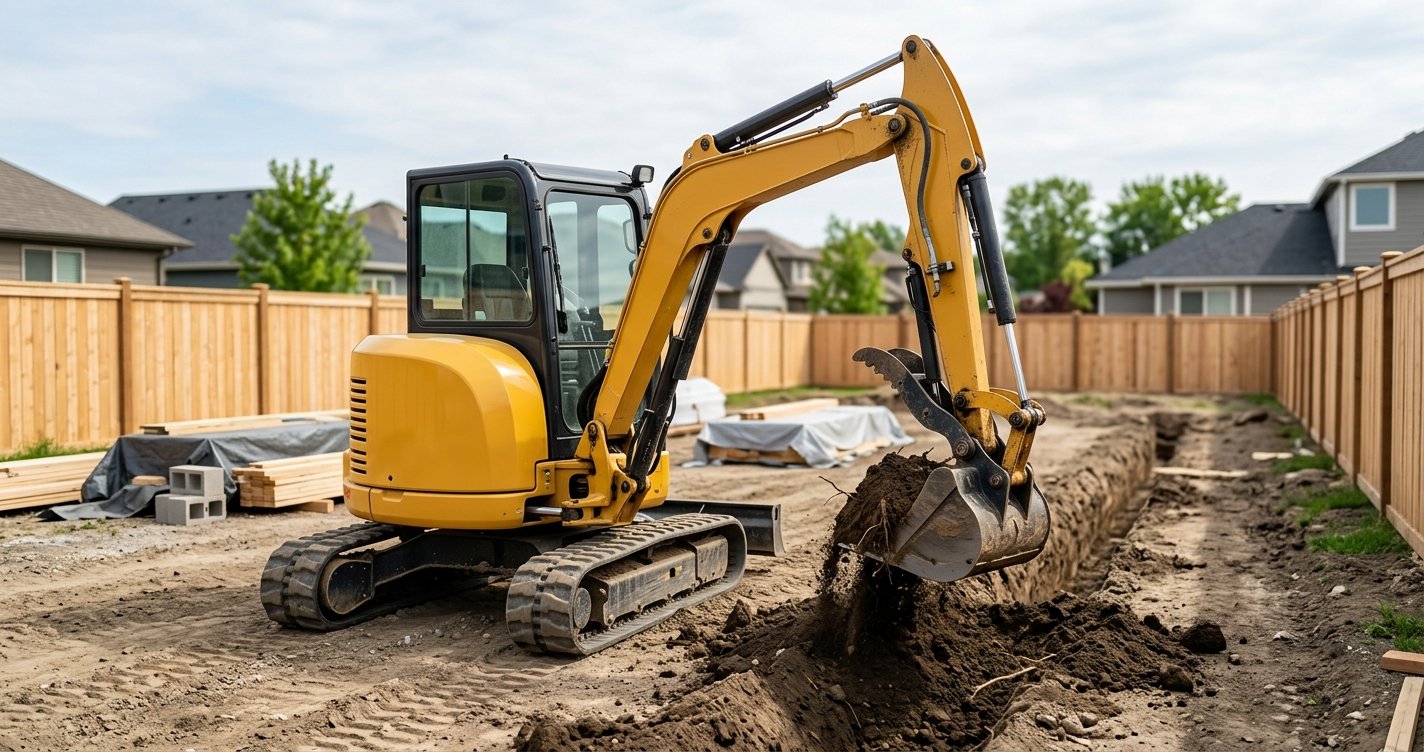
Mini Excavator Buying Guide for Small Contractors
Start With the Job, Not the Machine
Mini excavators range from under 1 ton to around 8 tons, and the right size depends entirely on the jobs you take on — not on getting the biggest machine you can afford.
Weight Class Guide
- Under 2 tons: Tight residential jobs, landscaping, narrow gates and fence lines
- 2-4 tons: The most common range for small contractors — utility trenching, foundation work, general excavation
- 4-8 tons: Larger site work, deeper digging depth, heavier lifting capacity
Diesel vs Gas Engines
Diesel engines dominate this category for a reason: better torque at low RPM, longer service life, and easier parts availability. Gas-powered mini excavators exist and cost less upfront, but they’re generally better suited to lighter, occasional use.
Tracks and Undercarriage
Rubber tracks are standard on most mini excavators and protect finished surfaces like driveways and lawns better than steel tracks. Check undercarriage width against gate and trailer clearances before buying — this catches more buyers off guard than any spec sheet number.
Attachments to Consider
- Standard digging bucket (usually included)
- Auger for post holes
- Hydraulic thumb for grabbing material
- Breaker for demolition or rock work
Bottom Line
Match the weight class to your typical job site access and digging depth needs first. Attachments and engine type are the next decision, not the first one.



Add comment