
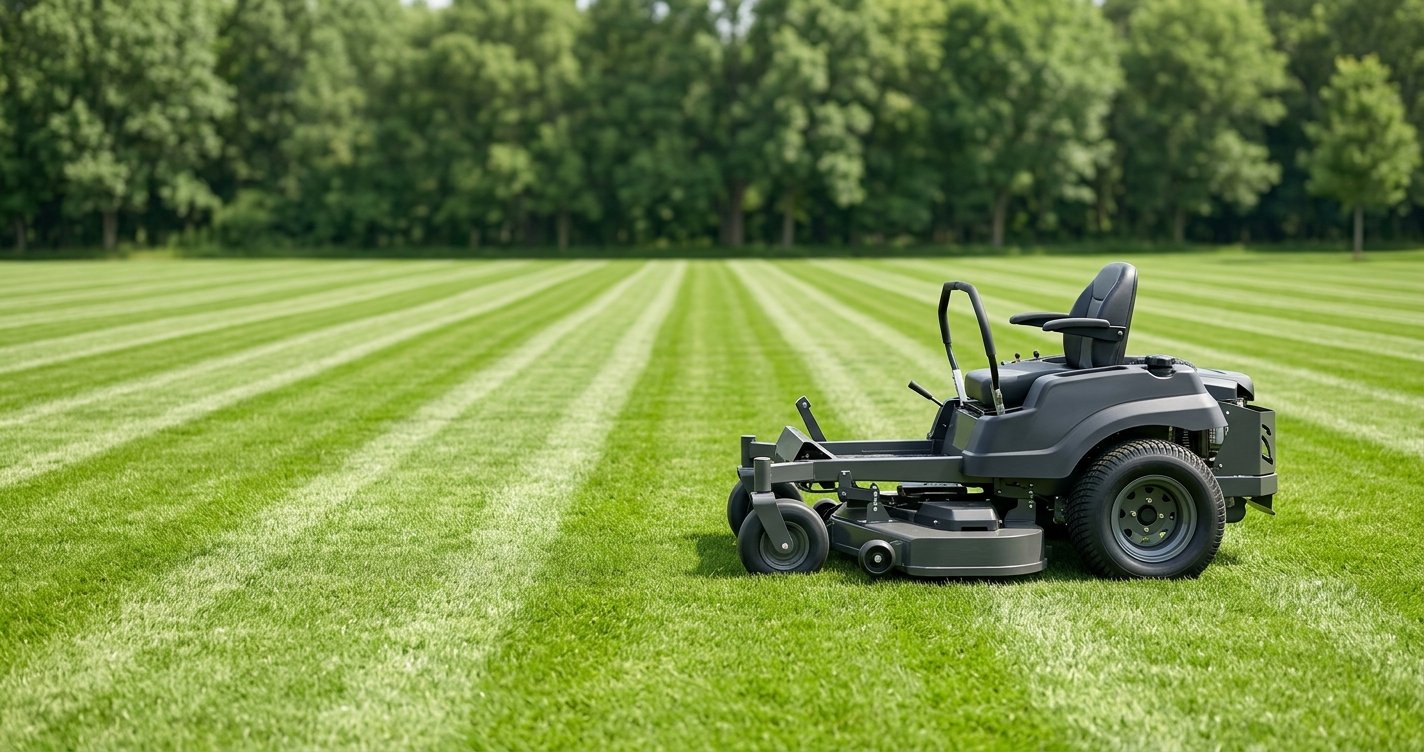
Zero-Turn Mower vs Riding Mower: What’s the Difference?
The Steering System Is the Real Difference
A riding mower steers with a wheel, like a car. A zero-turn mower steers with two levers that control each rear wheel independently, letting it pivot in place — hence “zero turn radius.” That single mechanical difference shapes everything else about how each machine performs.
Where Zero-Turn Mowers Win
- Cutting speed on open lawns — often twice as fast as a riding mower
- Maneuvering around trees, beds, and obstacles without repositioning
- Cleaner trim lines near edges since there’s no wide turning radius
Where Riding Mowers Win
- Easier learning curve — the wheel-and-pedal setup is familiar to most people
- Generally better on slopes and uneven terrain
- Lower upfront cost for comparable deck sizes
- More attachment options (tow-behind carts, dethatchers, snow blades)
Deck Size Considerations
Larger decks cover more ground per pass but are harder to maneuver in tight spaces. As a rough guide: under half an acre, a smaller deck (30-42″) is plenty. Over an acre with open space, a larger zero-turn deck (48-60″) saves real time.
Bottom Line
If your lawn is mostly open with a few obstacles and you value speed, a zero-turn is worth the learning curve. If your yard has slopes or you want the simplest possible operation, a riding mower is the safer choice.

Add comment